
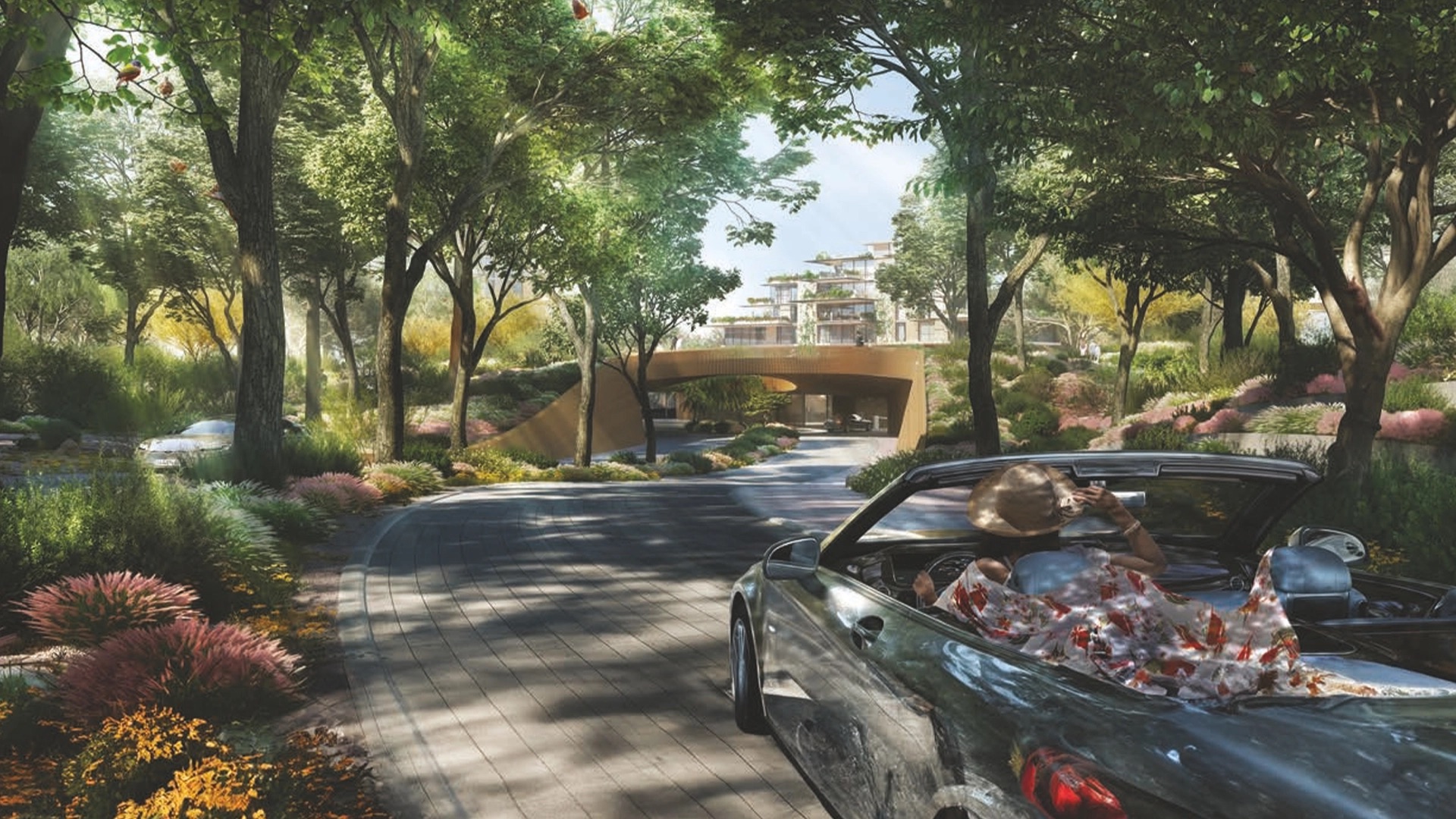
The UAE real estate market is entering a new design era — one where trees, shade, and nature-led planning are becoming central to property value.
Across master-planned communities in Dubai and Sharjah, developers are embedding dense planting, shaded walkways, and forest-style layouts into residential design. What was once considered “landscaping” is now becoming a core infrastructure strategy.
This shift — often described as forest living in the UAE — reflects a growing demand for wellness-driven, climate-responsive, and environmentally integrated neighborhoods.
From Landscaping to Living Ecosystems
Traditionally, greenery in UAE developments meant:
- Parks and lawns
- Roadside planting
- Decorative community gardens
Today’s masterplans are different.
New communities are being designed with:
- Tree-lined internal streets
- Continuous green corridors
- Shaded walking and cycling trails
- Dense vegetation is integrated between homes
- Microclimate cooling strategies
Instead of homes sitting on open desert plots, villas and townhouses are increasingly presented within immersive, tree-dense environments.
This marks a fundamental shift in how residential value is defined in the UAE.
Why Forest Living Makes Sense in the UAE Climate
In a hot-weather country, shade is not cosmetic — it is functional.
Nature-dense communities improve:
- Outdoor usability during warmer months
- Pedestrian comfort
- Walkability and community interaction
- Perceived neighborhood quality
- Air quality and environmental performance
Layered tree canopies reduce radiant heat, planted corridors support airflow, and shaded parks extend daily outdoor use. Buyers — particularly families — are responding positively to these features.
As urban density increases, nature-led living is transitioning from trend to long-term investment preference.
Nature-Led Communities Command Premium Interest
Developers report that buyers are increasingly prioritizing:
- Wellness-driven environments
- Emotional well-being
- Air quality and greenery
- Community walkability
- Outdoor lifestyle integration
According to industry leaders, homes within nature-integrated communities tend to demonstrate:
- Stronger absorption rates
- Higher buyer retention
- Long-term demand stability
- Improved capital value performance
Residential value is shifting from pure architectural design to environmental experience value.
Leading UAE Projects Embracing Forest Living
Several large-scale developments illustrate how this trend is materializing across the country.
Ghaf Woods – Dubai
Developed by Majid Al Futtaim, Ghaf Woods is positioned as Dubai’s first forest-integrated residential community.
- Over 35,000 native ghaf trees
- Designed to reduce neighborhood temperatures by up to 5°C
- Landscape-led master planning
- Wellness-focused residential design
Within the community, Maravelle Residences offer a boutique low-density enclave embedded within forest networks — emphasizing health, environmental stewardship, and community-centered living.
This project demonstrates how vegetation shapes the masterplan — not simply surrounds it.
Masaar – Sharjah
Developed by Arada, Masaar is organized around a central forest spine with thousands of trees and shaded pathways.
The latest expansion:
- 21 million sq ft masterplan
- Over 100,000 trees
- Approximately 4,000 villas and townhouses
Masaar reflects strong, sustained demand for forest-style family communities in Sharjah, blending sustainability with long-term value potential.
Sharjah Sustainable City
This sustainability-led development dedicates over 30% of its land to green space and landscaped networks — reinforcing the UAE’s regional shift toward environmentally integrated neighborhoods.
Biophilic Design: More Than Aesthetic Appeal
The forest living model aligns with biophilic design principles, which integrate natural systems into built environments.
Core benefits include:
- Microclimate moderation
- Psychological calm from water features and greenery
- Increased social interaction in shaded communal areas
- Encouragement of active lifestyles
- Biodiversity support
In high-density urban environments, these elements influence how residents experience daily life.
Developers are increasingly using:
- Data-driven planting strategies
- Microclimate modeling
- Layered canopy design
- Nature-led recreational zones
- Climate-responsive urban planning
This represents a shift from ornamental landscaping to environmental infrastructure planning.
The Investment Perspective: Can Forest Living Support Pricing Growth?
As more masterplans adopt this model, the market is testing whether nature-dense communities can:
- Sustain stronger demand
- Support price premiums
- Enhance rental performance
- Improve long-term asset resilience
Early indicators suggest:
- Premium buyer interest
- Higher absorption in off-plan launches
- Greater appeal to families and long-term residents
- Stronger positioning in competitive markets
With supply pipelines expanding gradually rather than aggressively, forest-style communities may contribute to pricing differentiation within Dubai and Sharjah.
A Legacy of Greening the Desert
The UAE’s focus on nature-integrated planning builds on a broader national vision of greening the desert — an ambition that dates back decades.
Today’s forest-style masterplans advance that vision through:
- Science-led planting systems
- Adaptive forest typologies
- Climate resilience strategies
- Sustainable irrigation models
- Biodiversity-focused landscape architecture
This approach aligns environmental sustainability with economic real estate value.
What This Means for UAE Homebuyers and Investors
For Families:
- Greater outdoor usability
- Healthier neighborhood environments
- Enhanced walkability
- Improved community interaction
For Investors:
- Stronger long-term demand fundamentals
- Premium positioning within competitive markets
- Growing appeal among international buyers
- Resilience aligned with sustainability trends
As urban expectations evolve, buyers are increasingly viewing green infrastructure as essential — not optional.
The Future of Forest Living in the UAE
Forest-integrated communities are no longer conceptual marketing visuals — they are active, large-scale masterplans shaping residential supply.
As climate pressures rise and wellness priorities deepen, the UAE real estate market is likely to see:
- More low-density, shade-focused villa communities
- Increased green space allocation in masterplans
- Greater integration of biodiversity systems
- Expansion of climate-adaptive residential models
Nature-led planning is emerging as one of the defining design and investment narratives of UAE real estate in 2026 and beyond.
The UAE’s forest living trend reflects a structural evolution in residential development. In cities like Dubai and Sharjah, developers are redefining property value through greenery, shade, and climate-responsive infrastructure.
Forest-style masterplans are no longer aesthetic upgrades — they are strategic, wellness-driven, and environmentally integrated communities designed for long-term livability.
As buyer expectations continue to shift toward quality of life, forest living may become one of the strongest differentiators in the UAE property market’s next growth cycle.
Invest in UAE forest living — where nature meets modern home living. Connect with us today!