.jpg?alt=media&token=13dd81b1-69a5-4b62-b2da-a2559f6c851c "Sustainable Future Cities: A Deep Dive into Masdar City’s Eco-Friendly Success")
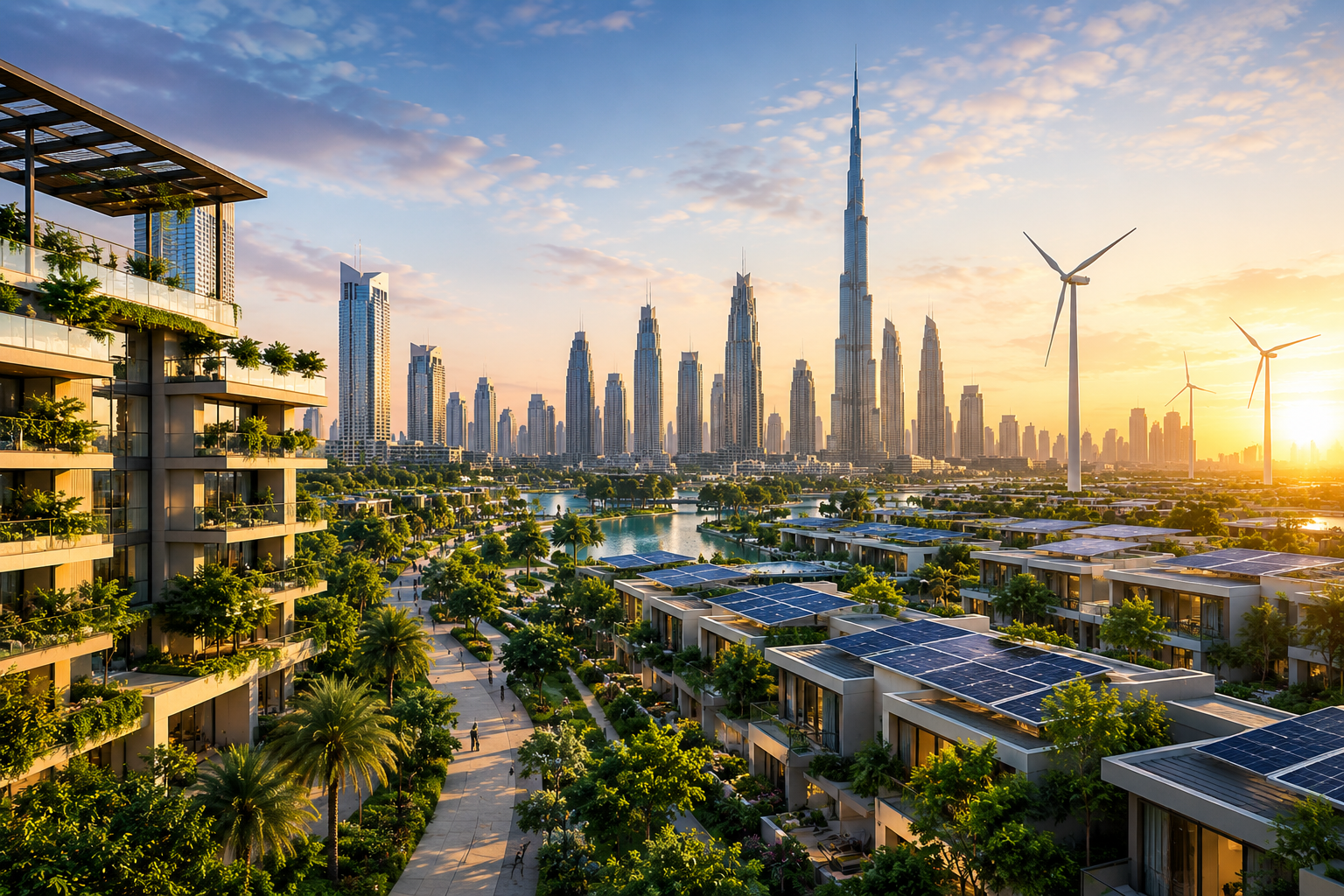
As cities grow rapidly, the demand for energy, water, transport, and housing continues to rise. This creates major challenges like pollution, high carbon emissions, and resource depletion. Sustainable cities are designed to solve these problems by combining smart planning, clean energy, and efficient infrastructure.
One of the world’s most well-known examples of this concept is Masdar City in Abu Dhabi, UAE—a pioneering model for low-carbon urban development and a living laboratory for future cities.
What is Masdar City?
Masdar City is a planned sustainable urban community and clean-tech hub developed to demonstrate how cities can reduce environmental impact while supporting economic growth.
Built as part of the UAE’s long-term sustainability vision, Masdar City aims to:
- Reduce carbon emissions significantly
- Use renewable energy sources
- Promote eco-friendly living and transport
- Support innovation and clean technology industries
The city is also a free zone business hub, attracting global companies in renewable energy, AI, and sustainable development sectors.
The Vision Behind Masdar City
Masdar City was designed with a simple but powerful idea:
A city can grow without harming the environment.
Its development supports the UAE’s broader goal of diversifying its economy beyond oil while leading global sustainability efforts.
Vision pillars include:
- Net-zero or low-carbon urban living
- Efficient use of land, water, and energy
- Integration of nature and technology
- A model for future smart cities worldwide
Sustainable Urban Design: How Masdar City Works
1. Smart Master Planning and Passive Design
Masdar City is carefully designed to reduce heat and energy use naturally.
Design features:
- Narrow shaded streets that reduce heat
- Buildings positioned to maximize wind flow
- Elevated urban layout to improve air circulation
- Reduced reliance on air conditioning through design efficiency
These passive strategies help parts of the city feel up to 10°C cooler than surrounding desert areas.
2. Renewable Energy and Clean Power
Masdar City uses a mix of renewable energy systems:
- Large-scale solar photovoltaic (PV) installations
- Rooftop solar panels on buildings
- Energy-efficient infrastructure systems
More than 11 MW of solar PV capacity is integrated into the city’s energy network.
This helps reduce dependence on fossil fuels and supports cleaner urban living.
3. Energy and Water Efficiency
One of Masdar City’s biggest achievements is efficiency in resource use.
- Buildings consume up to 40% less energy and water than standard developments
- Use of low-carbon construction materials like recycled aluminum
- Smart building systems to reduce waste and optimize performance
These features make the city a benchmark for sustainable architecture in the region.
4. Sustainable Transportation System
Masdar City is designed as a low-car urban environment, focusing on clean mobility:
- Electric driverless shuttle systems
- Eco-friendly buses within the city
- Walkable streets and shaded pedestrian pathways
- Cycling-friendly infrastructure
This reduces traffic emissions and promotes healthier urban lifestyles.